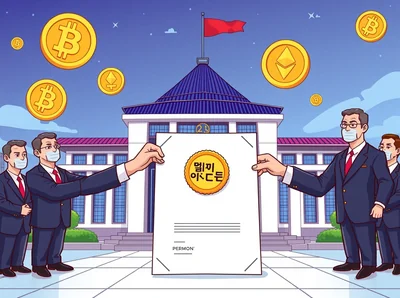
The South Korean government has delayed its planned legislation for won-denominated stablecoins, moving critical drafting and decisions into 2026. Officials say the postponement stems from unresolved disagreements among several agencies over how to structure issuance and oversight. The debate highlights a broader tension between preserving financial stability and enabling digital-asset innovation within existing institutions.
Overview of the Delay in South Korea’s Stablecoin Bill
The proposed framework is part of the second phase of South Korea’s Digital Asset Basic Act and was expected to progress sooner. According to reporting, the timetable shifted because multiple agencies require further negotiation on core elements of the law. That additional deliberation has pushed the lawmaking process into 2026 rather than the previously discussed timeline.
Key Disagreements Among Government Agencies
Three agencies—the Financial Services Commission (FSC), the Bank of Korea, and the Ministry of Economy and Finance—are central to the debate and have differing priorities. The most prominent point of contention is who should hold issuance rights for a won-pegged stablecoin and how concentrated those rights should be.
- Which agencies approve issuance and supervise operations.
- Whether issuance should be limited to bank-led consortiums with majority stakes above 51%.
- How to balance innovation incentives with safeguards for financial stability.
Expert Analysis on Regulatory Implications
Commentators point to a common regulatory dilemma: integrating new digital assets into existing financial systems without introducing systemic risk. Dr. Min-ji Park of Seoul National University notes, "Regulators globally prioritize financial stability with stablecoins, given their potential systemic importance," underscoring why agencies are cautious. Industry groups such as the Korean Blockchain Industry Promotion Association have said thorough deliberation is preferable to rushed rules that could harm the ecosystem.
Global Context and Competitive Positioning
South Korea’s discussions take place against a backdrop of other jurisdictions formalising stablecoin rules. Japan has authorised banks and trust companies as issuers, and Singapore introduced comprehensive payment token regulations, both serving as reference points for Korean policymakers. For recent domestic developments and earlier deadlines, see the reporting on the March 2025 deadline and pilot projects such as the BC Card pilot that explore payment uses of stablecoins.
Historical Precedents and Risk Management
Past incidents inform the current cautious stance: regulators often cite the 2022 Terra-LUNA collapse, which involved Korean founder Do Kwon, when discussing the need for strong safeguards. That episode has reinforced calls for robust backing requirements, transparent auditing, and clear supervision for any authorised won-pegged stablecoin. These risk-management priorities are central to why agencies are debating issuance models so carefully.
Why this matters (short note for a miner in Russia)
If you mine cryptocurrencies in Russia, this South Korea legislative delay will not change how your miners operate day to day. The postponement mainly affects the timetable for new won-denominated stablecoin services and leaves current exchange and payment rules unchanged for now. Exchanges and platforms that had planned stablecoin offerings in South Korea will face continued uncertainty and may delay launches or compliance work until agencies reach agreement.
What to do? Practical steps for a miner (1–1,000 devices) in Russia
- Follow exchange notices: keep an eye on announcements from platforms you use, since they may change stablecoin or fiat-peg support as rules evolve.
- Maintain operational security: ensure your mining rigs and wallets are updated and backed up, independent of regulatory changes in other countries.
- Prepare paperwork: if you use exchanges for settlements, keep KYC documents current so you can adapt quickly to any new compliance requirements.
- Monitor regulator statements: track official releases from Korean agencies and industry groups to understand when stablecoin offerings may appear or change.
Further reading
For context on South Korea’s broader digital-finance work and security considerations, see coverage of the digital financial security law that followed a major exchange hack. These pieces can help you understand how stablecoin rules may interact with other regulatory measures.