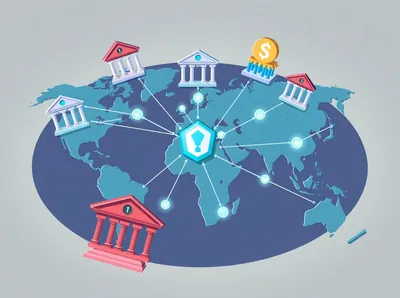
AEON announced integration of its QR code crypto payments into OKX’s X Layer on March 15, 2025, combining AEON’s Scan-to-Pay feature with OKX’s Ethereum Layer 2 infrastructure. The partnership aims to make blockchain payments simpler and cheaper for users and merchants in emerging markets. Early testing will focus on merchant partners in Singapore, Nigeria and Brazil during Q2 2025.
Overview of AEON and OKX Partnership
The integration embeds AEON’s payment protocol into OKX’s X Layer to provide a unified scan-to-pay experience that supports multiple cryptocurrencies. By connecting AEON’s infrastructure with X Layer, the collaboration seeks to offer instant settlement and lower friction compared with traditional payment rails. The companies identify Southeast Asia, Africa and Latin America as primary regions for adoption because of mobile-first payment habits and gaps in banking access.
Technical Architecture of the Integration
The system links AEON’s payment protocol directly to X Layer’s smart contract infrastructure, enabling near-instant settlement and on-chain verification. Users generate dynamic QR codes that carry encrypted payment data and interact with OKX Pay, the wallet inside the OKX mobile app, while the integration supports multiple EVM-compatible tokens. Core technical features include encrypted, short-lived QR codes and cryptographic checks that protect transaction integrity.
Market Impact and Regional Strategy
The rollout targets regions with high mobile usage and limited traditional banking, with initial merchant tests planned in Singapore, Nigeria and Brazil in Q2 2025. QR code-based transactions have grown by 187% in emerging markets since 2023, a trend the partners cite when defining their regional priorities. The phased approach starts with merchant pilots before broader availability across neighboring countries.
Expert Insights on the Collaboration
Dr. Elena Rodriguez, Director of Blockchain Research at the Digital Finance Institute, commented on the collaboration: “The AEON and OKX partnership represents a maturation of cryptocurrency payment systems. By combining QR code simplicity with Layer 2 efficiency, they address both user experience and scalability challenges that have hindered previous blockchain payment initiatives.” Her view highlights the integration’s focus on usability and scalability for real-world commerce.
Security and Regulatory Compliance
The integration uses multiple security layers to protect payments: dynamic QR codes contain encrypted transaction data and expire after a short period, and biometric authentication is available through OKX Pay. The system also incorporates Know Your Customer and Anti-Money Laundering protocols to align with regulatory requirements in target markets. These measures aim to balance user convenience with compliance needs across jurisdictions.
Why it matters — Почему это важно
For a miner operating in Russia with one to a thousand devices, the AEON–OKX integration matters mainly through the broader payment infrastructure effects rather than direct mining changes. Lower transaction costs on X Layer (reduced by approximately 94% for Ethereum operations) and payment rails that cut merchant fees below 0.5% can make crypto more usable in everyday commerce, which in turn may increase on‑chain activity and utility for mined coins.
What to do? — Что делать?
If you run mining equipment in Russia, consider these practical steps to stay prepared and potentially benefit from increased payment adoption. First, keep a small portion of mined rewards in liquid, EVM‑compatible tokens to test new payment flows and conversions. Second, review your custodial and withdrawal procedures so you can move funds to wallets like OKX Pay if you plan to accept or use crypto for purchases. Finally, follow regional rollout news and merchant adoption in nearby markets to assess whether accepting crypto payments could become a practical option for goods, services, or operational expenses.
Related developments
Other industry moves show similar interest in QR-based crypto payments; for example, companies are launching local QR payment pilots in Latin America and elsewhere, which offers useful comparisons for merchants and developers evaluating AEON’s approach. See a recent report on QR payments in Argentina for a regional example and read about a stablecoin pilot in Korea to compare alternate payment strategies.