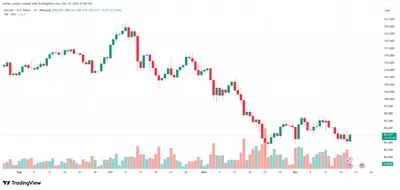
The AAVE token dropped approximately 18% over the past seven days, making it the worst performer among the top 100 cryptocurrencies. This decline stands out against the relative stability of major coins — Bitcoin and Ether traded without similar pullbacks, indicating that the pressure on AAVE is localized.
Aave: Brief Overview of the Price Drop
The decline is linked to an internal governance conflict within the protocol, which affected investor and trader confidence. During the sharp sell-off, one major holder liquidated roughly 230,000 AAVE — about $35 million at current prices — triggering an intraday drop of nearly 10%.
Details of the Governance Dispute
The discussion within the Aave community focuses on who will control the project’s brand, domains, and public channels. The debate escalated into a Snapshot vote and was actively conducted on forums and social media, adding uncertainty around coordination and decision-making.
Impact on Trust
Lack of transparency regarding control over public access points and the brand heightened market participants’ concerns, leading some to selectively reduce their exposure to the protocol. Unlike macro sell-offs, such disputes have no clear resolution timeline, creating prolonged risk.
Key Market Movements
Blockchain tracker data shows that the major holder quickly sold a significant volume of AAVE, swapping tokens for Ether and Bitcoin derivatives, which intensified the sell-off. Meanwhile, addresses linked to founder Stani Kulechov made purchases totaling about $12.6 million during the week, but these buys were insufficient to offset the overall downward trend.
Broader Market Context
The contrast between AAVE’s decline and the stability of other major coins highlights that sellers selectively reduced risk in the protocol due to governance disagreements. Bitcoin remained around $90,000, while Ether and other major tokens did not exhibit similar movements.
Why This Matters
For miners, the impact depends on whether you hold or trade AAVE: an 18% drop in a week means AAVE positions could have lost significant value. Even if you primarily mine Bitcoin or Ether, internal protocol disputes show that risk can be concentrated in specific tokens and may not reflect the overall market picture.
What to Do?
If you hold AAVE or are considering buying, first review your current exposure and asset allocation in your wallets. Assess how the decline has affected your overall portfolio and decide if you are prepared to hold the token amid prolonged governance uncertainty.
- Monitor on-chain activity of major holders and Snapshot votes to understand how the conflict is evolving.
- Avoid impulsive decisions — if needed, develop an exit or averaging plan based on predefined rules.
- If AAVE is a small part of your portfolio, consider diversifying into more stable assets you typically use for mining.
Summary
The 18% price drop in AAVE is primarily due to an internal dispute over control of the brand and public channels, not overall market weakness. A large sell-off of about 230,000 AAVE exacerbated the move, while the founder’s $12.6 million purchases were insufficient to recover the price.