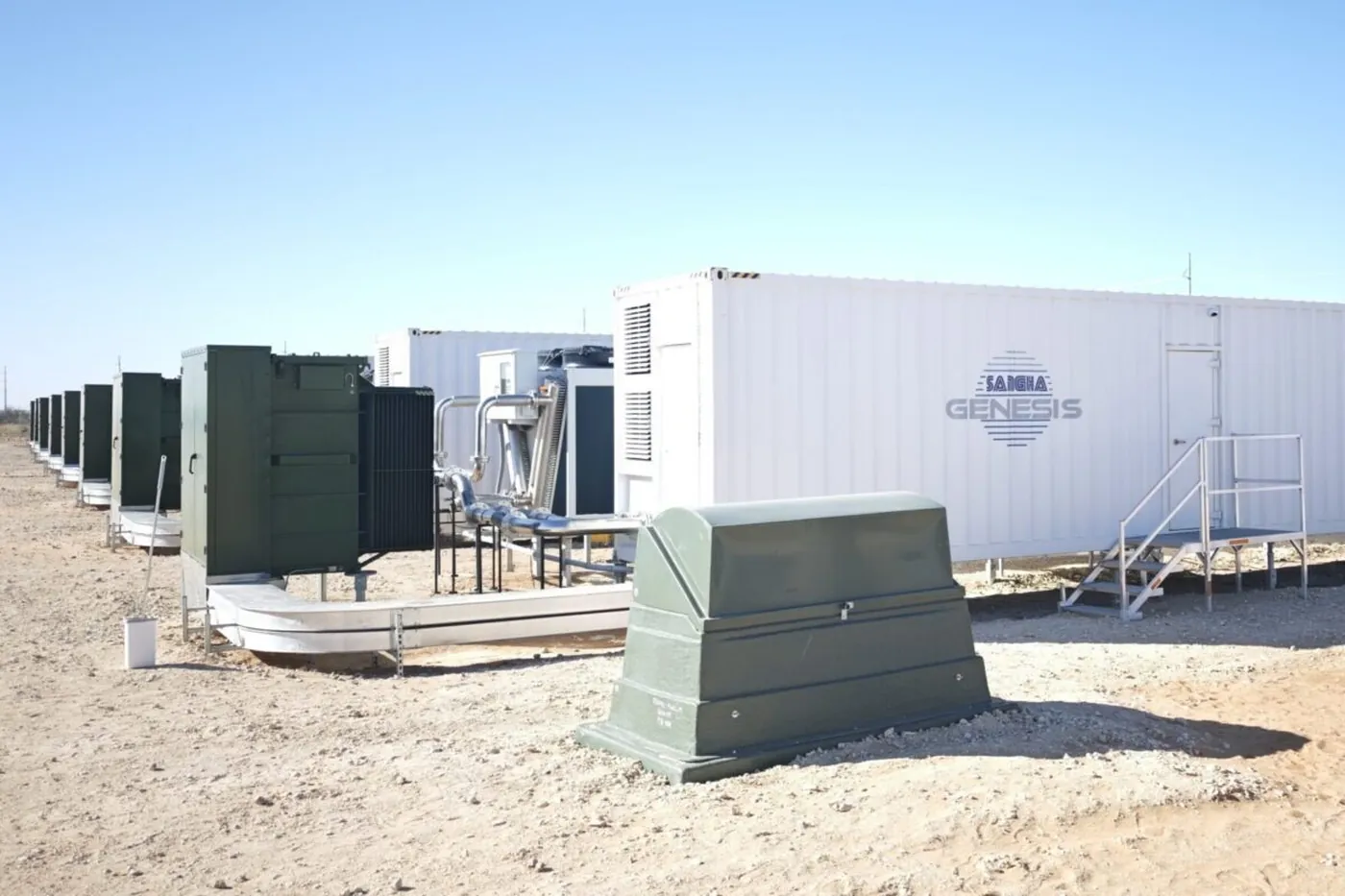
Sangha Renewables has commissioned a 20 MW mining farm in West Texas. The facility is located in Ector County near Odessa and began full operations following its opening ceremony on Friday.
Launch of Sangha Renewables Mining Farm
The farm operates "on the back of" a 150 MW solar installation and is designed to consume up to 19.9 MW of on-site power. Sangha develops, owns, and manages the facility, supplying its own mining equipment and load management systems.
TotalEnergies provides the site with additional retail electricity and balancing services, including reliable power during hours when solar generation is unavailable, as well as products to manage price volatility. The consulting firm Links Genco participated in the network design and compliance.
Technical Features of the Project
The site has an actual capacity of 19.9 MW and operates alongside a large 150 MW solar installation, enabling the generated energy to be directed to mining "on the back of" the nearby solar array. Sangha uses proprietary load management systems, allowing rapid adjustments in consumption in response to solar energy availability.
Collaboration with the retail energy provider and balancing services helps reduce operational risks during periods of low solar generation. The company also positions the project as a template for future deployments, where mining serves as a way to monetize renewable assets facing congestion or pricing challenges.
Economic Challenges for Miners
The project launched amid historically low hashprice levels, putting pressure on miners' margins. At the same time, the network difficulty decreased by less than 1%, offering limited relief to miners under current tight margins.
For those exploring a transition to renewable power, such projects demonstrate how solar generation can be combined with flexible mining loads. For a deeper understanding of the reasons behind this shift and its impact on profitability, see the article on transitioning to green energy and the piece on hashprice and renewable energy.
Why This Matters
For miners with any number of devices, Sangha's project demonstrates that mining can be integrated into renewable generation structures and commercial balancing services. Having a partner for retail supply and balancing products reduces the risk of downtime during non-solar hours and allows for more predictable energy cost calculations.
However, it is important to remember that launching a new farm does not change the reality of low hashprice nor guarantee increased profitability: the difficulty reduction was small, and overall network competition remains high. Therefore, decisions about expansion or switching energy sources should be made based on a realistic assessment of operational economics.
What to Do?
Miners in Russia with 1–1000 devices should first check their current electricity costs and load flexibility. Assess how quickly your equipment can reduce or increase consumption: if your setup is flexibly managed, it improves the chances of operating alongside intermittent generation.
- Analyze your tariff structure and availability of balancing services from your provider.
- Check if built-in management systems can be used to temporarily reduce consumption during peak demand hours.
- Do not rely solely on potential "green" labeling: compare actual costs and risks with the current hashprice.
If you are considering changing providers or participating in renewable generation projects, start with a pilot calculation and a small test deployment to understand how such agreements affect your margin and operational continuity.