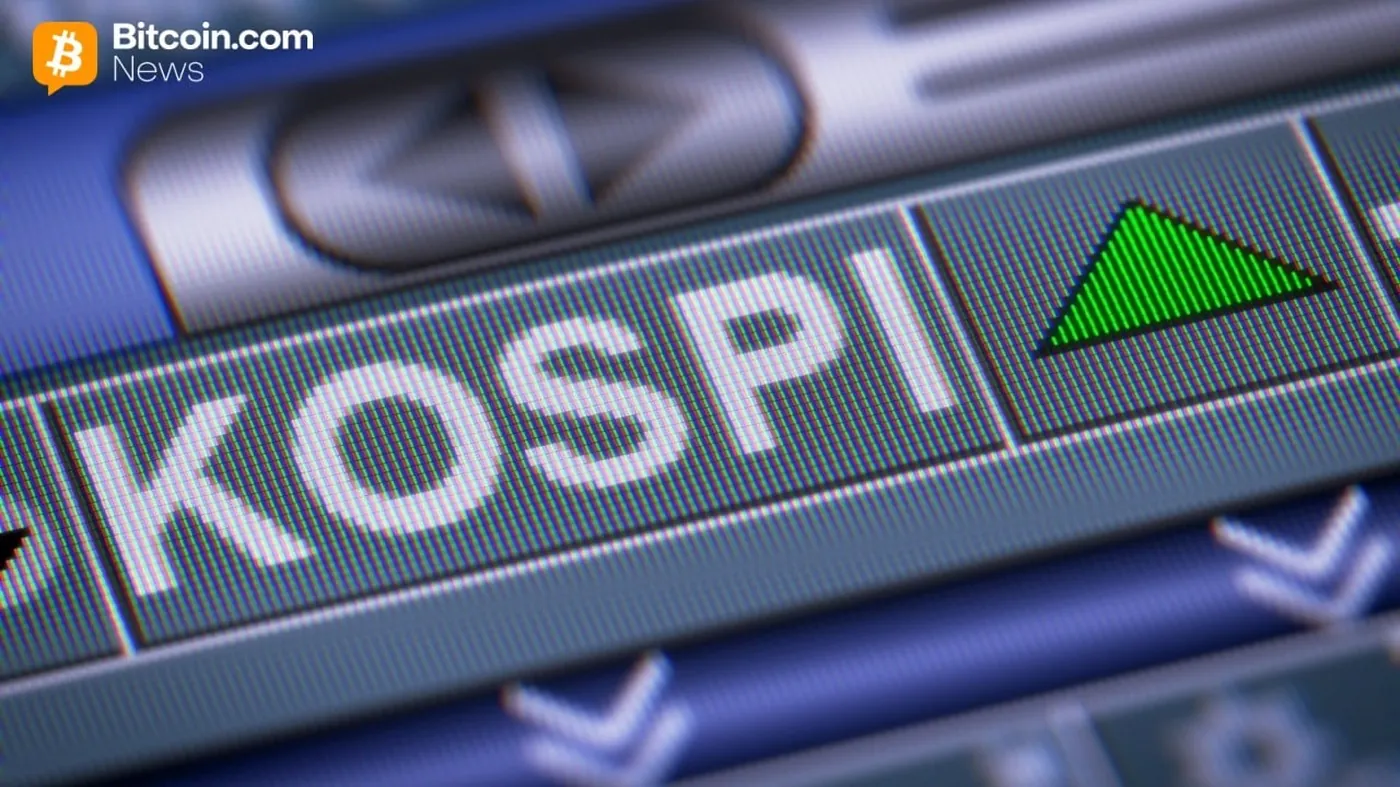
South Korea’s benchmark Kospi crossed the 5,000 mark for the first time on Jan. 22, 2026, registering an intraday peak of 5,019.54 before settling at 4,952.53 at the close. Compared with its level a year earlier, the index has risen by nearly 94 percent, a rapid advance that attracted wide attention across markets. The rally unfolded even as global markets were unsettled by geopolitical developments linked to U.S. political events, underlining a divergence between the Kospi and some Western exchanges.
Kospi Index Reaches Historic 5,000 Mark
The milestone on Jan. 22 marks the first time the Kospi has moved past 5,000, a symbolic level that highlighted the scale of the recent run-up. Although the index hit an intraday high above 5,019, it closed the session at 4,952.53, reflecting intraday volatility alongside the broader upward trend. Year‑over‑year, the Kospi has climbed sharply from the prior level of 2,547 to the current territory — an increase of nearly 94 percent.
Blue-Chip Stocks Drive the Rally
The advance was concentrated in major technology and automotive names that anchor South Korea’s market. Those blue-chip gains were a key factor in lifting the overall index and in shaping investor attention toward a handful of large-cap stocks.
- Hyundai Motor: rose from 208,500 won a year ago to 574,000 won.
- Samsung Electronics: climbed from 54,100 won to more than 150,000 won.
- SK hynix: nearly quadrupled from 199,700 won to 768,000 won.
Investor Reactions and Market Sentiment
Retail investors showed a mix of enthusiasm and caution as the rally accelerated, with some reporting FOMO (fear of missing out) and others warning of hype driven by peers and social media. At the same time, more experienced traders said they remained focused on market themes and flows rather than reacting to short-term jumps. The social aspect of gains — particularly among younger investors — was highlighted as a notable feature of the recent surge.
President Lee Jae Myung’s Role
President Lee Jae Myung had campaigned on ushering in a “Kospi 5,000 era” and publicly invested 40 million won in two exchange-traded funds last year. The Kodex 200 ETF he bought has risen 115.8 percent, while the Kodex Kosdaq 150 gained 37.9 percent, illustrating how the rally has also benefited popular passive products. Lee’s public investment and the ETFs’ returns became part of the broader conversation about participation in the market.
Analysts’ Outlook on South Korea’s Market
Some market observers noted that the Kospi’s upward trend, occurring even as Western markets faced pressure, suggests regional investor confidence in sectors tied to innovation and exports. That view framed South Korea as an attractive destination for equity capital in the recent period, though observers also pointed to ongoing external risks. The juxtaposition of strong domestic performance and global turbulence informed much of the commentary around the milestone.
Why this matters
If you mine crypto in Russia with anywhere from one to a thousand devices, this Kospi milestone mainly matters as a market-sentiment signal rather than a direct operational change. A strong equities rally can shift how retail and institutional investors allocate capital, which in turn can affect sentiment across asset classes; many retail stories in South Korea were driven by social media and FOMO. For miners, the most practical implication is to watch whether shifts in investor attention change liquidity or trading interest in crypto-related assets.
For context on how South Korean investors have behaved with crypto and related assets, see reporting on foreign crypto stocks and on recent crypto capital outflow from the country. These stories show that investor flows and social dynamics can move quickly, even if they do not change the fundamentals of mining operations at your site.
What to do?
Keep mining operations and investment choices separate: don’t alter your hardware deployment or power contracts in reaction to an equity-market headline. Operational decisions — like cooling, maintenance, and power management — depend on costs and device performance, not stock-index levels. Maintain routine checks on equipment and contracts so short-term market moves don’t force hasty operational changes.
If you consider reallocating capital, follow a few basic steps: 1) review your cash buffer before buying equities or ETFs, 2) avoid chasing social-media-driven tips, and 3) document any tax or regulatory implications of shifting funds across borders. For a snapshot of changing crypto market activity that may affect liquidity, you can read coverage of the crypto trading volume drop in South Korea.