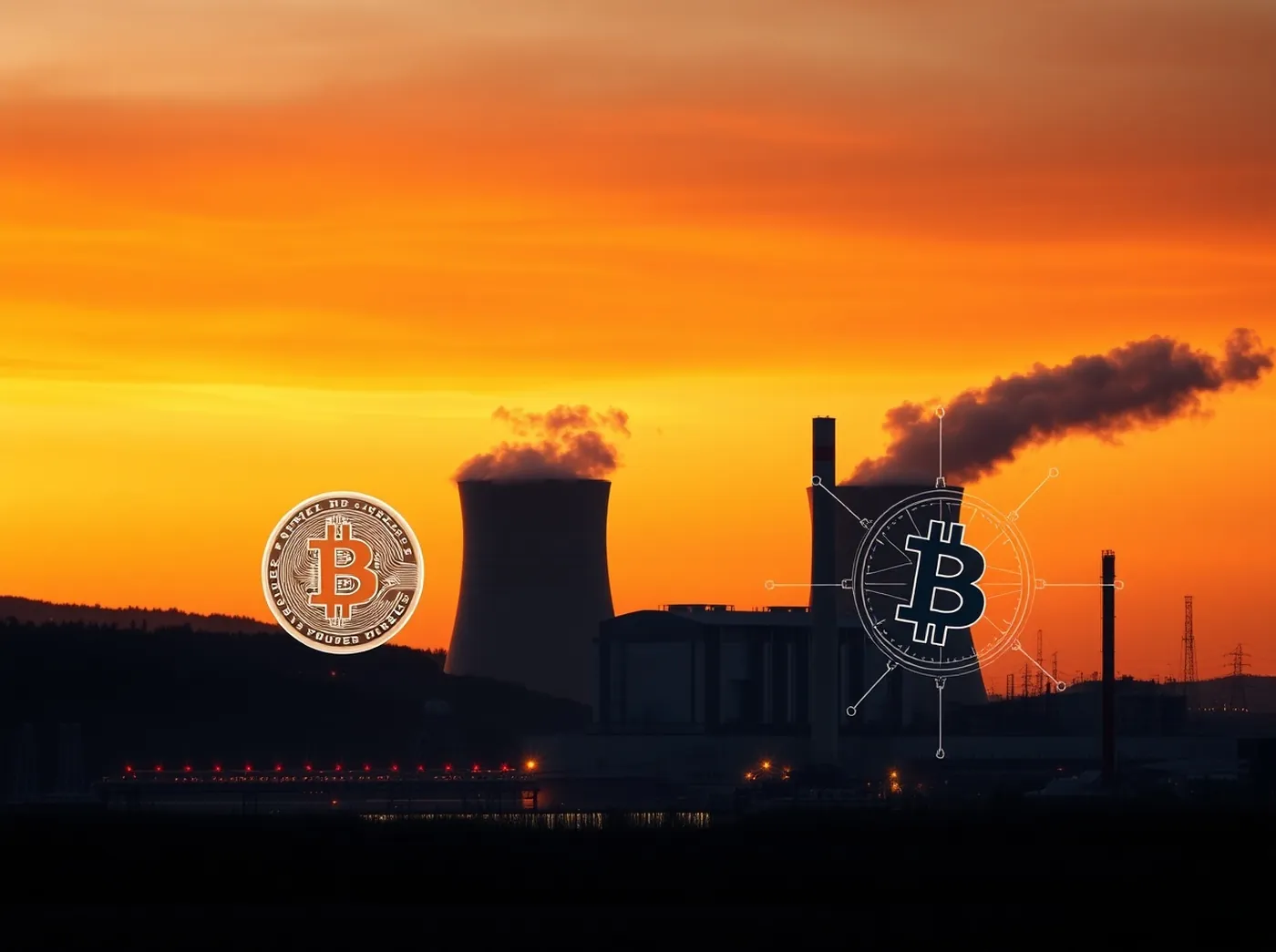
The Russian newspaper Kommersant reported that the topic of organizing cryptocurrency mining at the Zaporizhzhia Nuclear Power Plant (NPP) surfaced during ceasefire negotiations. According to the Russian side, Vladimir Putin indicated that US representatives expressed interest in utilizing the plant's substantial energy output for mining. It was also reported that American negotiators proposed a possible joint operation model with equal shares for Russia, Ukraine, and the US. However, no technical or financial agreements on this idea have been recorded—the project remains a preliminary concept.
Proposal for Cryptocurrency Mining at Zaporizhzhia NPP
According to Kommersant's publication, discussions extending beyond purely defense and humanitarian issues included economic ideas for the plant's future use. The article emphasizes that one of the concepts presented was to harness the NPP's energy for digital currency mining involving multiple parties. This part of the report mentions a proposal for equal shares among Russia, Ukraine, and the US; this description emerged during negotiations and is considered a discussed idea rather than an agreed plan. More details on the Russian leadership's statement can be found in our article Putin on Mining Discussions.
Technical and Political Aspects of the Proposal
Organizing large-scale mining near the reactors would require dedicated computing equipment, a reliable cooling system, and stable connection to the plant's power grid. Any such solutions are complicated by the current status of the facility: Zaporizhzhia NPP has been under Russian military control since early 2022, and IAEA missions have repeatedly warned of serious safety risks due to military activity near the reactors. The political dimension is also complex—experts point to numerous geopolitical and legal obstacles that make implementing such a project highly problematic.
Expert Opinions on Mining at Nuclear Plants
The article includes comments from specialists explaining the technical rationale and risks of the idea. Dr. Elena Petrova notes: "Nuclear plants are designed for steady-state grid load. Cryptocurrency mining can act as a controllable, flexible demand source, potentially helping to balance a grid. However, co-locating major computing infrastructure at a plant under international scrutiny and in a war zone introduces unprecedented risk factors that likely outweigh any theoretical economic benefit." This highlights that while the energy's theoretical suitability for mining exists, the uncertainty and risks amid conflict are significant. Mark Chen also recalls existing pilot projects in the US and emphasizes geopolitical barriers: "There are existing pilot projects exploring behind-the-meter bitcoin mining at power generation sites, including some in the United States. ... The Zaporizhzhia concept follows this logic but transplants it into a completely non-commercial, hyper-politicized environment."
Broader Context of Mining and Geopolitics
The discussion of mining at a nuclear power plant reflects a wider interest in leveraging large energy sources for digital assets and attempts to integrate such projects into political negotiations. Experts note that similar technical ideas are discussed in other jurisdictions, but the political and security situation surrounding Zaporizhzhia NPP makes this idea uniquely contentious. The mention of mining within negotiations adds a new layer to discussions about the plant's status and future use.
Why This Matters
If you mine at home or run a small farm, the news about mining discussions at Zaporizhzhia NPP is unlikely to cause immediate changes in your operations. At the same time, the emergence of such an idea in negotiations shows that major energy infrastructure is viewed as an asset with multiple economic and political implications. For miners, this signals the importance of monitoring developments—not because tariffs will change tomorrow or power will be cut, but because such discussions can influence the legal framework and industry reputation in the long term.
What to Do?
- Follow official sources and reliable publications: keep information from verified reports and avoid relying on rumors.
- Review the legal and contractual basis of your activities: ensure compliance with local regulations and energy supply terms.
- Assess physical security risks and electricity availability: maintain contingency plans for power outages.
- Avoid participating in projects requiring equipment placement in disputed or occupied territories: this increases legal and reputational risks.
- Maintain basic cybersecurity and equipment insurance: minimal measures reduce losses in emergencies.