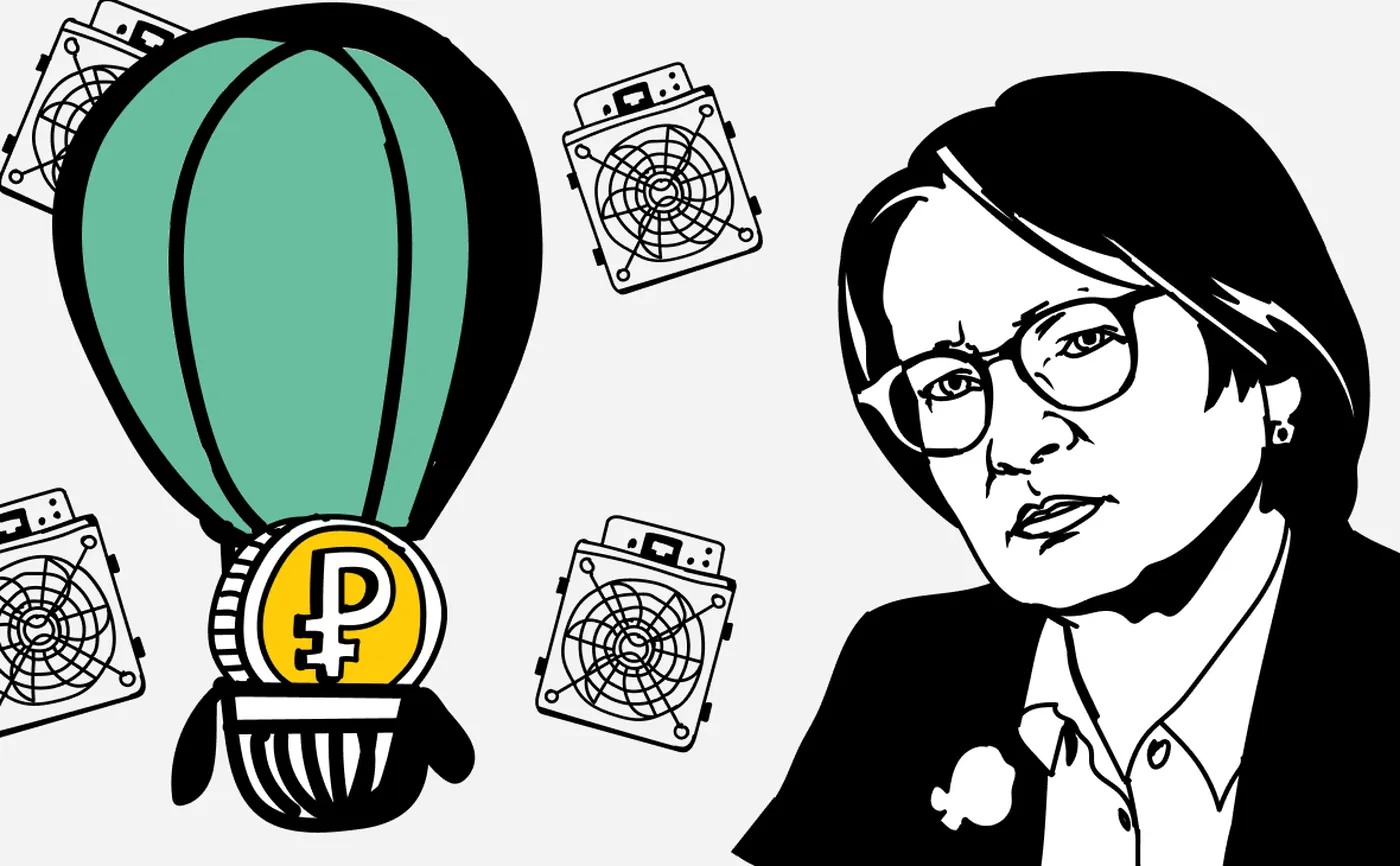
Elvira Nabiullina, head of the Central Bank, stated that cryptocurrency mining can serve as an additional factor contributing to the strengthening of the ruble. However, she emphasized that quantitatively assessing this influence is difficult because a significant part of the industry remains in a "gray zone," with flows occurring outside standard channels.
Central Bank Statement on Mining's Impact on the Ruble
Nabiullina noted that the growth of mining cannot be directly linked to the current strengthening of the ruble, as activity in this sector did not emerge this year. Nevertheless, mining does affect the currency market as one of several additional factors. The difficulty in assessment is precisely due to the lack of full transparency regarding the volume and direction of flows, which hinders precise mathematical correlation with the exchange rate.
You can read more about this position in the article Nabiullina's opinion, which analyzes her key points and caveats on assessing mining's influence.
Presidential Administration's View on Mining
Maxim Oreshkin, Deputy Head of the Presidential Administration, called the underestimation of financial flows from mining and cryptocurrencies one of the reasons for inaccurate ruble exchange rate forecasts and emphasized that the sector has become a new export item. He pointed out that the Bank of Russia needs to consider these figures when forming the balance of payments data, as some flows currently remain unnoticed by traditional accounting systems.
Details on the administration's perspective on mining and its role as hidden exports are collected in the article hidden exports, which discusses the consequences for the currency market.
Mining Regulation in Russia
Legislative rules specify that from November 1, 2024, cryptocurrency mining in Russia can be performed by individual entrepreneurs and legal entities if they are included in a special registry of the Federal Tax Service (FNS). Individuals are also allowed to mine without registry inclusion but are limited to an energy consumption cap of 6000 kWh.
Who Must Comply with New Rules
- Individual entrepreneurs and legal entities must register in the FNS registry for legal mining and income reporting.
- Individuals may mine within the 6000 kWh energy limit and must comply with income accounting requirements.
- Mining infrastructure operators (data centers and hosting facilities) are required to register in the FNS registry as legal entities providing services to miners.
Statistics and Russia's Position in Global Mining
According to estimates by the Industrial Mining Association (APM), Russia accounted for more than 16% of the global hashrate during the summer, placing the country second worldwide in mining. This scale helps explain why government bodies are interested in mining's impact on the balance of payments and currency market.
Central Bank's Plans for Cryptocurrency Regulation
Vladimir Chistyukhin, First Deputy Chairman of the Bank of Russia, stated the need to "whiten" the cryptocurrency sector and urged the prompt adoption of laws regulating cryptocurrency operations. According to regulator representatives, discussions on the rules are ongoing with the Ministry of Finance, Rosfinmonitoring, and other agencies.
It is proposed that cryptocurrency transactions primarily be conducted through existing market participants under current licenses, which should reduce the share of flows outside standard channels and simplify their accounting in official statistics.
Why This Matters
For miners in Russia, the industry's scale and official statements mean the government views mining as a factor influencing the economy and currency market. The regulators' focus on "whitening" the sector and accounting for flows indicates possible tightening of control over operations and requirements for transparent reporting.
Even if your operation is small, changes in rules and increased control may affect registration requirements, income accounting, and interaction with hosting operators. Understanding current official positions helps prepare in advance for mandatory procedures and avoid violations.
What to Do?
- Check if your mining activity requires registration: individual entrepreneurs and legal entities must be in the FNS registry for legal mining.
- If you are an individual, ensure your total energy consumption does not exceed the 6000 kWh limit and keep income records for reporting.
- If you use data center or hosting services, verify the operator's registration in the FNS registry and the format of income reporting.
- Follow official clarifications from the Central Bank, Ministry of Finance, and FNS—they will affect practical requirements for accounting and fund circulation.