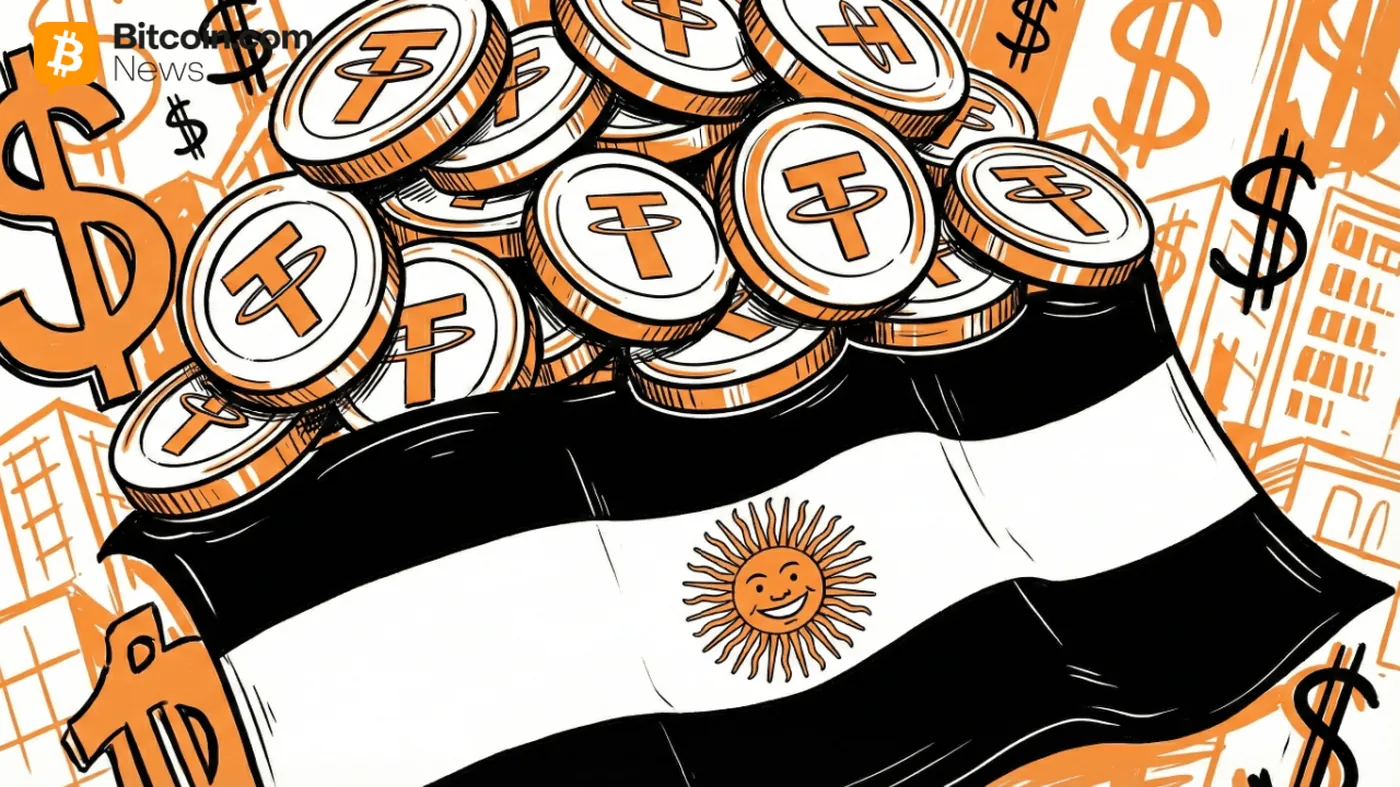
Congressman Martin Yeza of the new Argentine Congress stated that stablecoins could assume a new key role in Argentina's payment system, acting as dollar proxies. He also advocated for the central bank to have the ability to hold cryptocurrency and for state-owned companies to engage in mining. Local analysts and several entrepreneurs support the so-called economic "tetherization," which the new Congress intends to discuss in 2026.
What is economic "tetherization"?
Here, "tetherization" refers to the use of stablecoins, such as USDT, as proxies for the dollar within the national economy. In this model, stablecoins serve as a means of payment and store of value approximating the dollar but functioning in digital form. Proponents note that this scheme can offer advantages over traditional dollarization, including the absence of direct involvement from another country's government and lower transaction costs.
Plans of Argentina's new Congress
The new Congress will need to address several critical issues related to stablecoins and cryptocurrency in 2026, including the role of digital assets in stabilizing the economy. According to Martin Yeza, the government plans to reconsider the dollarization approach by incorporating stablecoins and cryptocurrencies as dollar proxies.
Yeza proposes integrating stablecoins into payment circulation and allowing the central bank to hold cryptocurrency, as well as permitting state companies to participate in mining. These proposals have found support among local analysts who view "tetherization" as one reform option.
Expert opinions
Local crypto-entrepreneur Roselo Lopez publicly endorsed the idea of "tetherization," emphasizing the benefits of using Tether (USDT) as a major stablecoin. He highlights the convenience of traceable transactions and lower transaction costs compared to the logistics and approvals involved in traditional dollarization; for more on discussions around Tether and USDT, see Paolo Ardoino's perspective.
Supporters of "tetherization" note that traditional dollarization would require consent and logistical support from the U.S., making it more complex compared to a stablecoin-based approach.
Cryptocurrency development in Argentina
Reports also indicate that Argentine banks are ready to offer crypto services to their clients, and the Central Bank is developing specific measures to open the cryptocurrency market to private banks. These moves by the banking system create infrastructural prerequisites for broad integration of digital assets into the economy.
Additionally, there is discussion about state companies participating in mining and the regulator holding digital assets on its balance sheet, reflecting a broader interest in using crypto technologies in public policy. Similar initiatives in other jurisdictions, such as plans to issue exchange-traded stablecoins, show that the topic of stablecoins is gaining regional relevance — see also the example of an exchange-traded stablecoin.
Why this matters
For miners in Russia, there may not be direct or immediate impact from Argentina's plans, but changes in one country reflect a broader trend: growing interest from regulators and banks in stablecoins and crypto services. Expanding banking crypto services and enabling state companies to mine alter the accessibility of fiat and digital liquidity in regional markets.
Practically, this means international payment schemes and demand for cryptocurrencies as a means of settlement may evolve, resulting in more options for conversion and payments that should be considered when planning mining revenues and expenses.
What to do?
- Monitor news and regulatory changes: Regularly tracking updates from various jurisdictions will help anticipate shifts in liquidity and payment routes.
- Keep accurate records and prepare documentation: Careful accounting and record-keeping will simplify dealing with fiat and tax authorities amid rule changes.
- Evaluate withdrawal options and counterparties: Compare available exchanges, aggregators, and banking services by fees and verification requirements.
- Optimize energy consumption and equipment: Regularly assess farm efficiency and electricity contracts to maintain profitability under any market conditions.
- Diversify wallet and pool risks: Use reliable wallets, distribute hash power among pools, and consider counterparty risks.