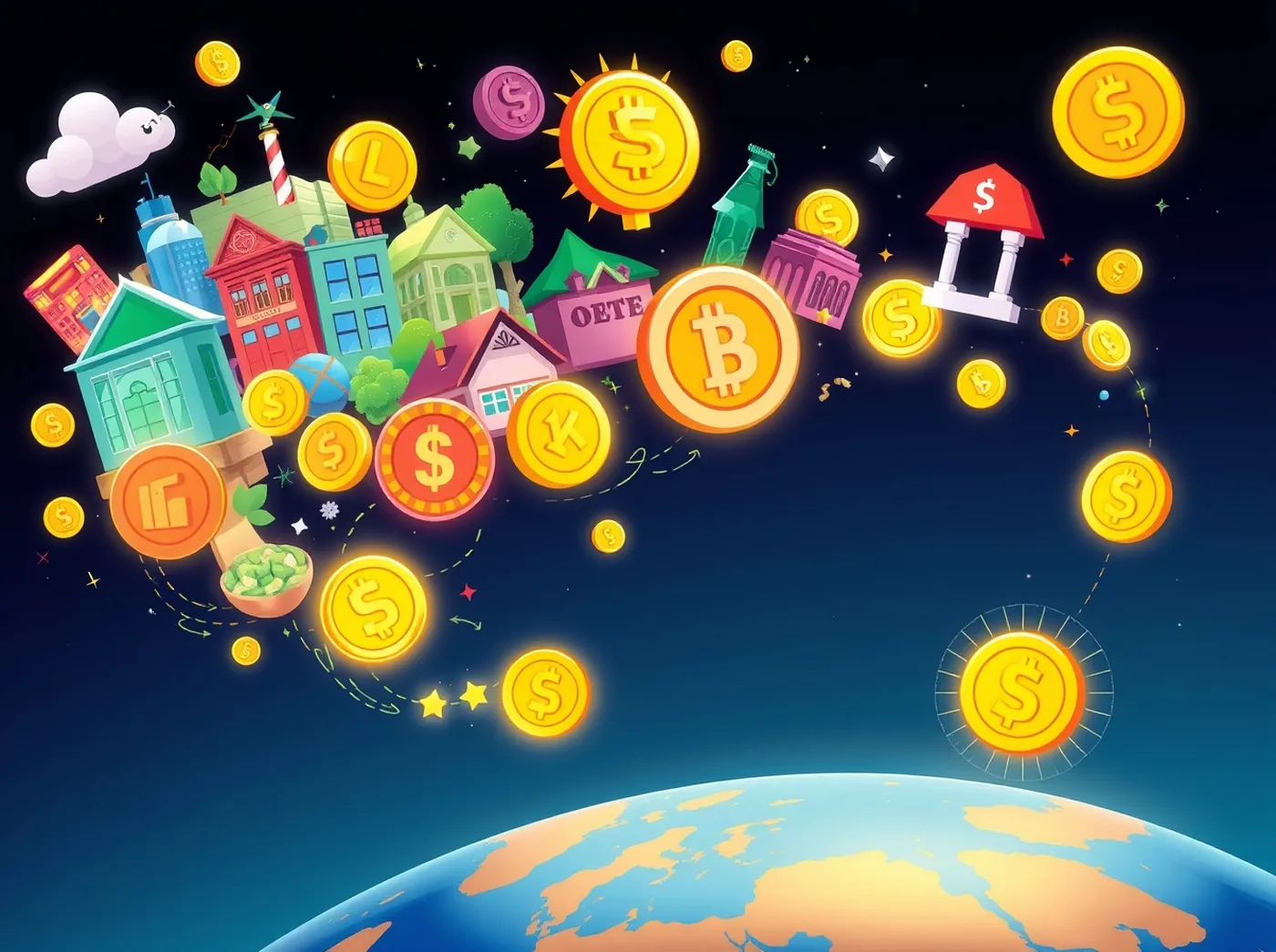
Tokenization converts rights to a real asset into a digital token on the blockchain, changing how we think about ownership and settlements. Mark Greenberg, an executive at Kraken, says this isn’t science fiction but a real financial trend that simplifies value transfer and settlements. This article explains what tokenization is, why it matters, and its practical benefits and limitations.
What Is Tokenization and Why Does It Matter?
Definition of Tokenization
At its core, tokenization involves creating a digital representation of rights to a real asset as a token on the blockchain. This token acts as a digital certificate of ownership that can be stored and transferred among network participants. This breaks away from traditional paper-based or centralized records, where settlement and verification of rights take longer.
How Tokenization Transforms Assets into Digital Tokens
A token links specific rights or ownership shares to a unique digital object on the blockchain, simplifying accounting and transfer. The technology provides cryptographic protection of ownership records and enables transactions to be executed instantly given the proper infrastructure. This approach removes some intermediaries typically involved in transferring rights.
Examples of Assets That Can Be Tokenized
- Securities and investment fund shares
- Real estate and stakes in infrastructure projects
- Intellectual property and artworks
Benefits of Tokenization for Financial Systems
The key advantage is faster settlements: tokenization allows deals to be completed instantly and capital to be freed, reducing credit and operational risks. Additionally, tokenization can lower clearing and settlement costs through automation and process standardization. Altogether, this increases asset accessibility and can improve liquidity for token holders.
How Tokenization Redefines the Concept of Money
Traditional Definition of Money
Traditionally, money is associated with issuance and use of currencies issued by states, as well as bank liabilities serving as a medium of exchange and store of value. This system relies on settlement infrastructure and trust in issuers and intermediaries. In the conventional model, money’s role is tied to centralized control and regulation.
How Tokenization Expands the Concept of Money
According to Mark Greenberg, tokenization allows any asset to function as money if it can be securely stored and instantly transferred. This broadens the idea of money from "what the state issues" to "any tokenized store of value trusted and exchangeable by people." As a result, layers of ownership and settlement become more flexible and interchangeable.
The Role of Trust in Tokenized Assets
For a tokenized asset to work as money, two conditions are necessary: reliable storage and immediate transfer capability. Trust is established through technical solutions (such as key security and platform integrity) and institutional guarantees provided by market participants. Without these elements, a token remains just a record rather than a fully functional medium of exchange.
What Are the Real Benefits and Challenges of Tokenization?
Benefits of Tokenization
- Financial inclusion — broader access to investments and assets
- Reduced costs for settlement and clearing through automation
- Increased settlement speed and capital efficiency via instant settlements
Main Challenges
- Regulatory complexities and the need to integrate with existing rules
- Security: key storage and infrastructure reliability
- Technical and operational integration with current financial systems
How to Overcome These Challenges
Addressing these issues requires collaboration among technologists, institutions, and regulators to develop clear standards and integration procedures. Developing reliable custodial storage and audit mechanisms is important, along with pilot projects that test practical compatibility of tokens with existing processes. Gradual implementation and clear accountability models among market participants are also beneficial.
What Future Awaits Tokenized Assets?
Interest in tokenization is growing, and major financial organizations are already piloting the conversion of bonds, funds, and private equity into tokenized forms. Different projects focus on deposits, funds, or stakes in structures, helping to test technical and institutional compatibility of tokens with traditional systems. For example, banking and fund solutions related to tokenized deposits and funds provide practical cases to assess market advantages and limitations.
In this context, it’s useful to look at industry examples: tokenized deposits and initiatives linked to the JPMorgan fund on Ethereum, which illustrate different approaches to digitizing traditional products. Discussions on the growth of the tokenized asset market can also be found in the article about potential industry scaling, providing insight into development directions of the tokenized asset market. These examples help understand how infrastructure is evolving and what solutions are tested in real conditions.
Why It Matters
For a miner, even with a small number of devices, tokenization won’t directly change equipment operation but may affect the surrounding financial infrastructure. Instant settlements and capital release could eventually impact market liquidity and transfer speeds between platforms where you store or sell your assets. Additionally, new tools representing value in tokens might create extra ways to use accumulated funds or secure positions.
What to Do?
If you manage from one to a thousand machines, it’s useful to follow simple rules: monitor news about reliable platforms for storing and trading tokenized assets, regularly review key management and backup practices, and choose exchanges and custodial services with clear reputations. It’s also important to study how token integration affects liquidity availability on platforms you use and be ready to adopt new tools only after verifying their security.
FAQ
What is tokenization in simple terms?
Tokenization is the process of creating a digital representation of rights to a real asset as a blockchain token, allowing faster trading and settlement. Such a token records ownership or a share, simplifying transfer between participants.
How is tokenization different from cryptocurrency?
Cryptocurrencies are native digital assets of a network, whereas tokenization involves creating tokens representing existing physical or financial assets. Both use blockchain but have different origins and purposes.
How secure are tokenized monies?
Security depends on the chosen blockchain platform and solutions for key storage and custodial services. Blockchain provides cryptographic protection of records, but users must follow security best practices and select trusted services.
Can existing banks work with tokens?
Yes, but this requires integration and building bridges between banking infrastructure and blockchain networks. Many projects focus on such solutions within pilot initiatives.
What assets can be tokenized?
Almost any asset with clear ownership rights can be tokenized: stocks, bonds, real estate, commodities, and intellectual property. The key is properly formalizing rights and transfer processes on a digital platform.