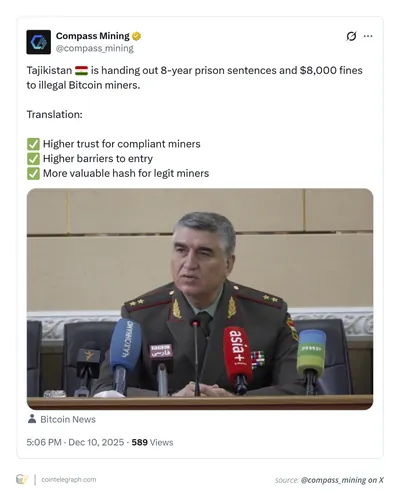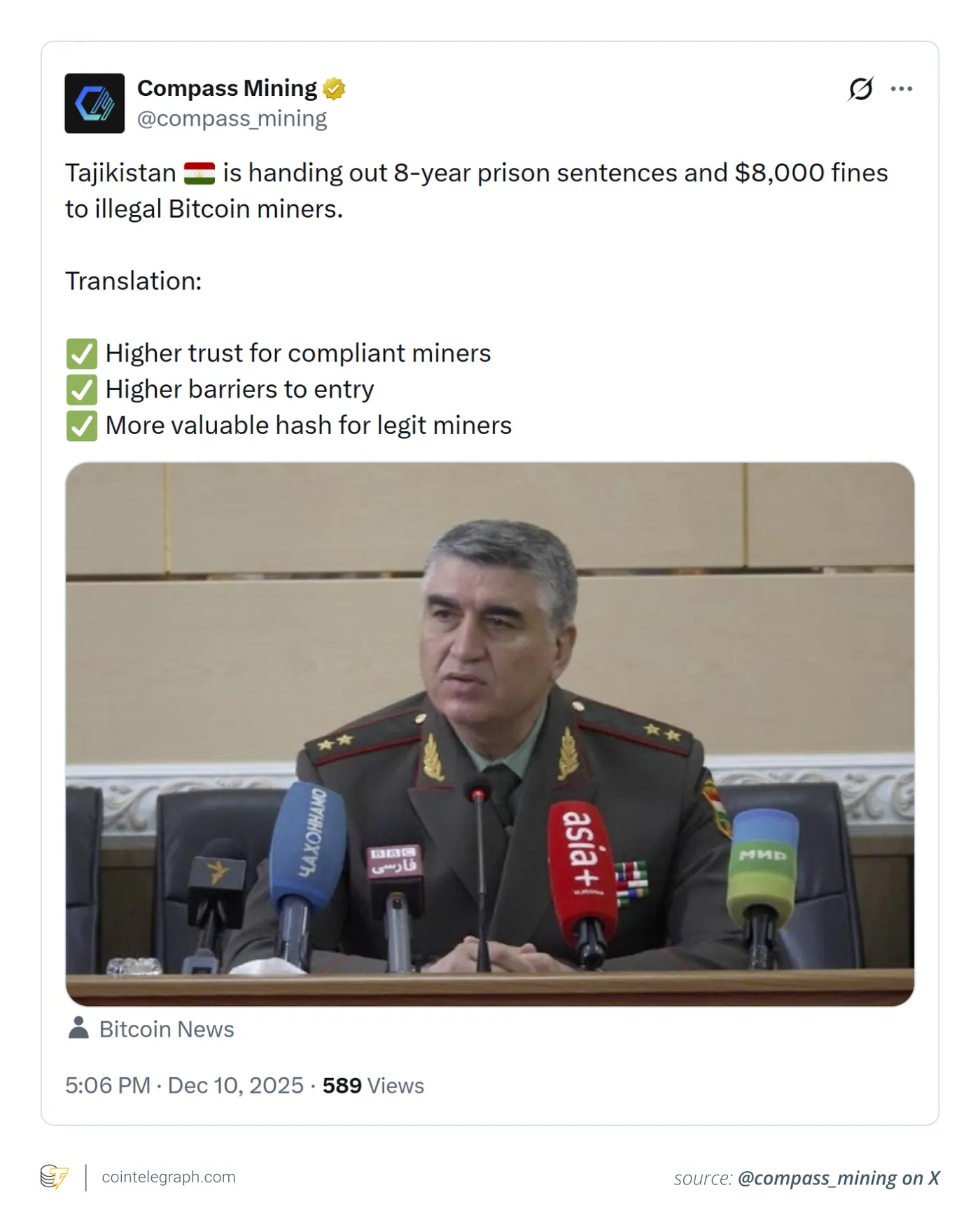
In December 2025, the parliament of Tajikistan approved amendments to the criminal code that toughen penalties for illegal use of electricity for cryptocurrency mining. The new law introduces Article 253(2), which imposes hefty fines and prison terms for those who use stolen or unregistered electricity for mining.
New Tajikistan Law on Illegal Cryptocurrency Mining
According to the new amendments, basic violations are punishable by fines ranging from $1,650 to $4,070. If the offense is committed by a group, the fine increases to $8,250, with possible prison terms from two to five years. For large-scale or organized operations, the punishment can reach up to eight years in prison. The law was introduced by Prosecutor General Khabibullo Vokhidzoda, who noted that damages from illegal mining have already reached $3.52 million, with several criminal investigations underway. See also: Illegal Mining in Malaysia Causes Over $1 Billion in Losses in 5 Years
Energy Crisis in Tajikistan and the Impact of Mining
Tajikistan relies heavily on hydropower, and due to low water levels in reservoirs during winter, authorities are forced to limit electricity supply. In some regions, residents receive electricity for only 2–4 hours a day. Officials say illegal mining farms worsen the situation by connecting to the grid unlawfully and bypassing meters. This not only causes financial losses but also damages infrastructure.
A single ASIC miner consumes between 3.5 and 6 kWh, and large farms with thousands of devices place significant strain on the power system. Moreover, offenders often tamper with wiring and meters, facilitating tax evasion and money laundering.
International Context and Global Measures Against Illegal Mining
Tajikistan is not the only country tightening measures against illegal mining. In Malaysia, thousands of illegal mining sites have been uncovered in recent years; in Kuwait, a major operation to shut them down took place in 2025; and China and Kazakhstan have imposed restrictions due to energy issues and environmental risks. In many countries, illegal mining is now treated as electricity theft or an economic crime, rather than just an administrative offense.
Outlook and Mining Industry Response
Stricter regulations in Tajikistan and other countries are prompting miners to relocate to regions with more lenient rules or cheaper electricity. At the same time, the industry is gradually shifting to renewable energy sources and less energy-intensive technologies, such as proof-of-stake blockchain models. For Tajikistan, the goal of the law is to prevent further damage to the power system and economy, and to demonstrate serious intent to investors and businesses.
The Law’s Significance for Tajikistan’s Energy and Economic Security
The measures are aimed at protecting the national economy and energy infrastructure. In addition to mining, penalties for other forms of electricity theft and non-payment of bills have also been toughened—fines can reach $9,900, and prison terms up to eight years. Thus, the state is demonstrating its determination to combat violations in the energy sector and establish transparent rules for market participants.
Why This Matters
For Russian miners monitoring global trends, Tajikistan’s experience shows how quickly measures can tighten in countries facing electricity shortages. This signals that even small mining projects may be at risk if a country faces an energy crisis. Increased oversight and rising fines are trends that could affect other markets as well.
What to Do?
- Closely monitor legal changes in countries where mining is conducted or planned.
- Consider using renewable energy sources and energy-efficient equipment.
- Avoid any schemes involving illegal grid connections or meter bypassing.
- Assess the risks of operating in regions with unstable energy supplies and a high likelihood of stricter regulations.