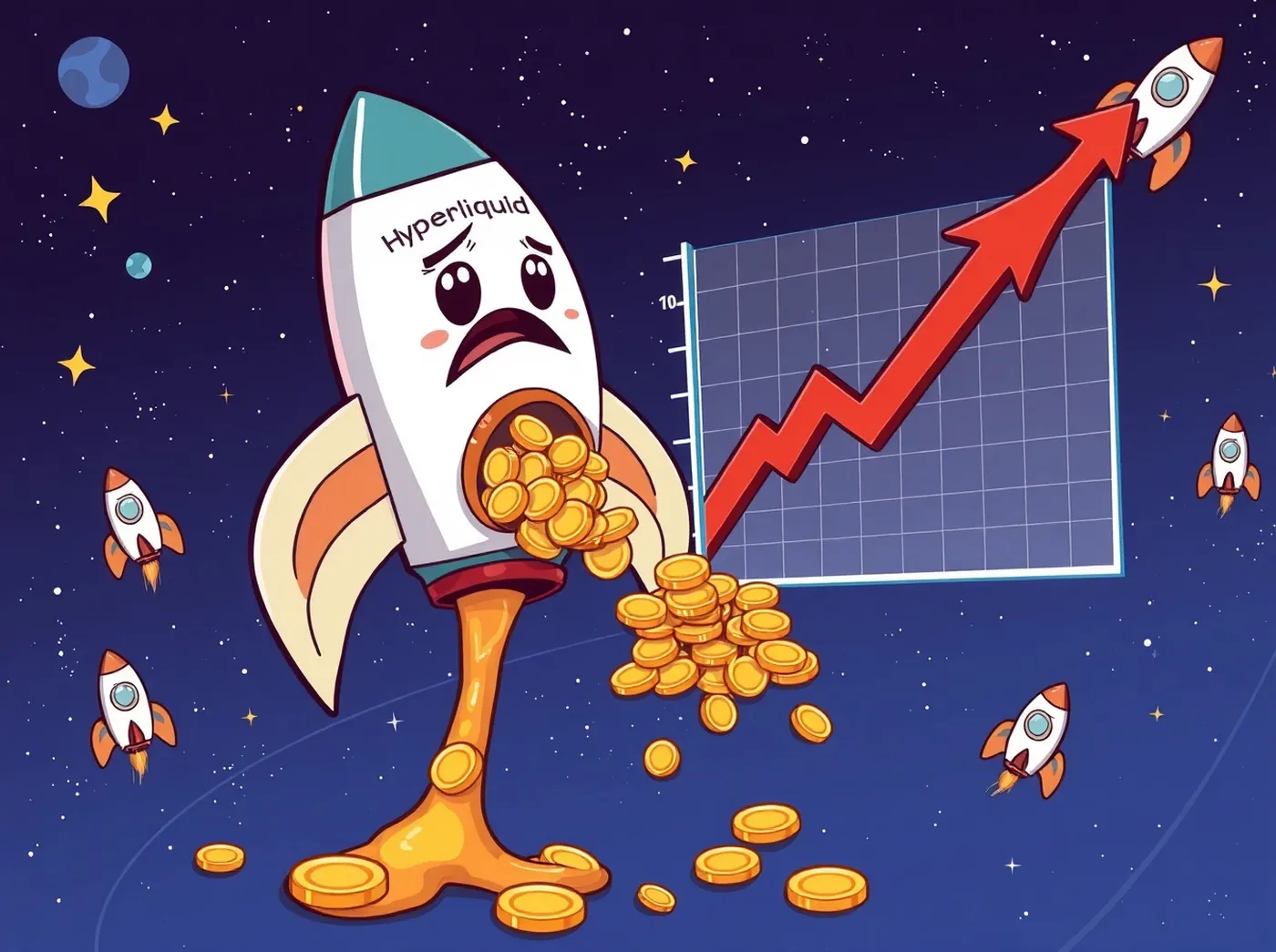
Hyperliquid recorded net outflows exceeding $430 million over a single seven-day period, according to a report by Wu Blockchain. This outflow is the third-largest weekly withdrawal in the platform’s history and coincided with a sharp reduction in assets under management. The scale of the exit has reduced the platform’s total value locked and raised questions about user confidence.
Key numbers: outflows, TVL and AUM changes
The headline figure is a net outflow of over $430 million in one week, as reported by Wu Blockchain. That movement contributed to a decline in Hyperliquid’s AUM from a $6 billion peak in September to approximately $4 billion today, which reflects a material drop in total value locked and available liquidity. For users, lower TVL typically means less depth for trades and a higher chance of slippage or temporary funding stress.
Possible causes of the capital flight
The original report and coverage note several interconnected factors may have driven withdrawals, including shifts in user sentiment, comparisons with competing platforms, and security or performance concerns. The piece avoids definitive claims about a single cause and instead frames the event as the result of multiple pressures acting together. For broader market context, readers may compare other market stress events such as crypto futures liquidations that signal acute selling, or recent spot ETH ETF outflows that reflect capital movement in and out of different venues.
Implications for Hyperliquid, HLP token and DeFi
Large net outflows can exert selling pressure and negatively affect sentiment around a platform’s native token, which in turn may influence HLP’s price dynamics. Reduced AUM and TVL mean the exchange has less pooled liquidity to support large positions, increasing the chance of higher slippage for users. At a sector level, the episode underlines how quickly capital can reallocate across DeFi and centralized venues when confidence shifts.
How Hyperliquid could respond
The coverage outlines general stabilization options platforms commonly consider, such as protocol parameter adjustments, communication to rebuild user trust, and potential incentive changes to attract deposits. As a decentralized perpetual futures DEX, Hyperliquid’s responses are constrained by its non-custodial architecture and the choices of its user base. Any operational changes would focus on restoring liquidity and reassuring counterparties rather than guaranteeing immediate inflows.
Почему это важно
If you run between one and a thousand mining rigs in Russia, this kind of large outflow matters even if you don’t use Hyperliquid directly. Market episodes that reduce liquidity can increase volatility across crypto venues, which may affect exchange rates you trade or hedge against, and can change the availability of on‑chain liquidity for swaps. Additionally, sharper sentiment shifts can alter the flows between DEXs and CEXs, with knock-on effects for price stability and transaction costs.
Что делать?
For a miner in Russia deciding what to do, prioritize these practical steps: review where you custody any non-mining crypto (exchange vs self-custody), monitor TVL and liquidity metrics for services you use, and keep risk exposure aligned with your tolerance. If you hold platform tokens like HLP, consider that significant outflows can create selling pressure; base actions on your time horizon and whether you rely on those tokens operationally. Finally, stay informed via primary reports such as that from Wu Blockchain before making moves.
FAQs
Q: What exactly are ‘net outflows’?
A: Net outflows occur when the total value of assets withdrawn from a platform exceeds the total value of new assets deposited over a specific period. It indicates more money is leaving than entering.
Q: Is my money safe on Hyperliquid after these outflows?
A: The safety of funds depends on the platform’s smart contract security and your personal risk management. Large outflows don’t directly compromise security, but they can indicate shifting user sentiment. Always conduct your own research.
Q: Could this cause Hyperliquid to shut down?
A: While a severe and sustained loss of liquidity is a major challenge, it doesn’t necessarily mean shutdown. Many protocols navigate such periods by adapting their models and rebuilding trust.
Q: Where is the withdrawn capital likely going?
A: Capital could be moving to competing DEXs, centralized exchanges (CEXs), stablecoins, or simply into personal wallets (self-custody) as users adopt a ‘wait-and-see’ approach during market uncertainty.
Q: How does this affect the price of Hyperliquid’s token (HLP)?
A: Significant outflows can create selling pressure and negatively impact sentiment around a platform’s native token, potentially affecting its price. However, tokenomics are complex, and multiple factors are at play.
Q: Should I withdraw my funds from Hyperliquid?
A: This is not financial advice. You must make your own decision based on your risk tolerance, investment strategy, and confidence in the platform’s long-term vision and security.
Disclaimer: The information provided is not trading advice; Bitcoinworld.co.in holds no liability for any investments made based on the information on this page.