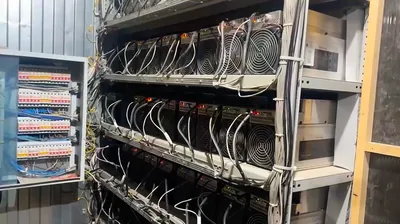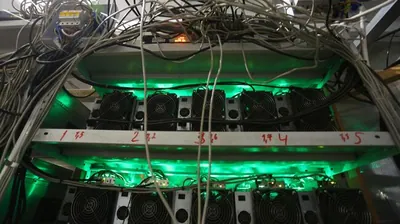
FSB officers in Chelyabinsk have shut down a mining farm accused of stealing electricity worth ₽121 million. According to the investigation, four individuals were involved in organizing the operation, which ran from November 2024 to April 2025, providing false data on energy consumption.
Details of the Chelyabinsk Mining Farm Shutdown
Law enforcement officials state that the perpetrators manipulated meter readings and transmitted inaccurate data, resulting in significant financial losses for energy companies. The damage was inflicted notably on Uralenergosbyt and PJSC Rosseti Ural, according to media reports.
The investigation involves four people connected to the farm's organization. Regional sources and media provide more case details, describing the circumstances of the farm’s discovery and shutdown.
Criminal Case and Potential Penalties
A criminal case has been initiated under Part 4, Article 159 of the Russian Criminal Code — fraud committed by an organized group on a particularly large scale. Law enforcement is conducting operational measures and gathering evidence for the investigation.
The maximum penalty under this article includes up to 10 years imprisonment and a fine of up to ₽1 million. The case materials also mention detentions and searches carried out during the investigation.
Farm Owner and His Political Connections
Regional media report that the crypto farm owner is entrepreneur Maksim Yatsun, known as a developer. The media also note his family ties to Chelyabinsk politician Andrey Yatsun.
According to publications, Yatsun has been detained, and searches were conducted at his workplace and residence. Earlier reports mention another criminal case involving Yatsun as a suspect.
Context of Illegal Mining in Russia
News from Chelyabinsk comes amid several other uncovered illegal mining farms in Russia, with damages also reaching tens of millions of rubles. For example, a recent case near Kaliningrad involved a farm stealing electricity worth ₽56 million; more about detection methods of such crimes can be found in the article on ₽56 million thefts.
In some regions, multiple sites were found simultaneously, highlighting the prevalence of schemes bypassing metering and the use of industrial or semi-industrial premises for equipment placement.
Why This Matters
For miners with small setups (from one to a thousand devices), this case demonstrates that law enforcement monitors large-scale electricity theft schemes and is ready to initiate criminal proceedings upon signs of organized activity. Even if you are not involved in fraud, such news increases scrutiny from energy companies and regulators toward high energy consumption sites.
Moreover, major investigations often involve audits of documentation and metering, which may require explaining the legality of consumption and equipment origin. This raises the risk of commercial and operational difficulties for active miners.
What to Do?
If you mine in Russia—at home or in a small data center—it’s advisable to verify your compliance with energy supply and metering requirements. Below is a brief checklist to help reduce risks with authorities and energy providers.
- Check contracts with your electricity supplier and ensure meter accuracy; update documentation if needed.
- Make sure meter readings are transmitted correctly without interference.
- Keep documents for purchased equipment and invoices to simplify explanations during inspections.
- If planning to scale equipment, discuss load changes with your electricity supplier in advance and obtain written approvals.
- If you suspect claims from energy companies or law enforcement, consult a lawyer specializing in energy law and criminal practice.
FAQ
What happened? FSB stopped a mining farm in Chelyabinsk accused of stealing ₽121 million worth of electricity; a criminal case is underway.
Who owns the farm? Regional media name entrepreneur Maksim Yatsun as the owner; he has been detained, and searches were conducted at his office and residence.
What charges apply? The case is under Part 4, Article 159 of the Russian Criminal Code — fraud by an organized group on a large scale.
What penalties are possible? Up to 10 years imprisonment and a fine up to ₽1 million under Part 4, Article 159.
Who suffered damages? The energy companies Uralenergosbyt and PJSC Rosseti Ural incurred losses.